


HVAC & Mold: Florida-Specific Settings While You’re Away

Florida’s climate presents a unique challenge for property owners. While the "Sunshine State" attracts tenants year-round, the high humidity levels pose a constant threat to your investment, particularly when a property sits vacant.
For landlords and investors, leaving a property empty—whether between tenants or during a seasonal vacancy—requires a strategic approach to climate control. Simply turning off the AC to save on electricity is one of the costliest mistakes you can make. Without proper airflow and temperature regulation, mold can colonize a home in as little as 24 to 48 hours.
This guide details the specific HVAC settings required to protect Florida properties from mold growth during vacancies, along with technology-driven solutions to monitor your assets remotely.
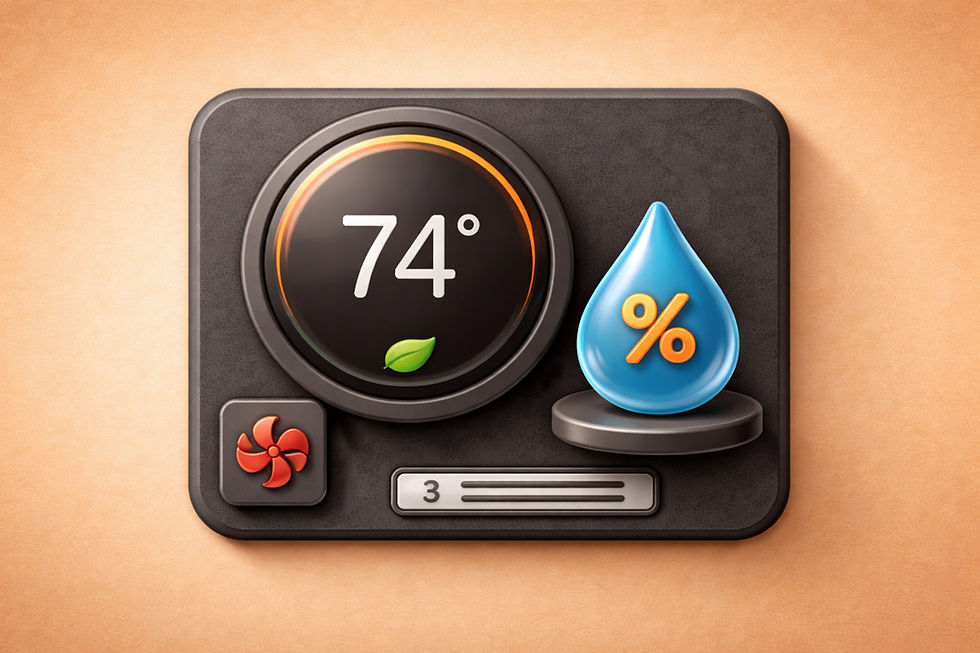
The Relationship Between Humidity and Mold
Mold spores are everywhere, but they need moisture to grow. In Florida, where outdoor humidity often exceeds 70% or 80%, the air inside your property is constantly battling moisture intrusion.
The HVAC system acts as the property's lungs. It doesn't just cool the air; it removes moisture. When warm, humid air passes over the cold evaporator coils of the air conditioner, condensation forms and drains away, effectively dehumidifying the space.
If you turn the system off, humidity levels inside the home will rapidly equalize with the outdoor air. Once relative humidity (RH) climbs above 60%, porous materials like drywall, carpet, and wood become breeding grounds for mold.
Ideal Thermostat Settings for Vacant Florida Properties
There is a common misconception that setting the thermostat to 85°F or higher is sufficient for an empty home. While this might save a few dollars on the electric bill, it often fails to trigger the AC system frequently enough to remove moisture effectively.
For Florida properties, we recommend the following parameters:
1. Temperature: Set to 76°F - 78°F
Setting the thermostat between 76°F and 78°F strikes the right balance. It is cool enough to require the system to run periodically throughout the day to ensure air circulation and dehumidification, but warm enough to avoid excessive energy bills.
2. Relative Humidity: Keep Below 60%
Your primary goal is humidity control, not temperature control. The "danger zone" for mold growth begins at 60% relative humidity. Ideally, you want to maintain indoor humidity between 45% and 55%.
3. Fan Setting: "Auto," Never "On"
Always set the fan to "Auto." This ensures the fan only runs when the compressor is actively cooling (and dehumidifying) the air. If you leave the fan on "On," it will continuously blow air over the wet evaporator coils even when the compressor is off, re-introducing moisture back into the home.
The Risks of Turning the AC Off Completely
It can be tempting to shut down the system entirely to eliminate energy costs during a vacancy, especially in cooler winter months. In Florida, this is a dangerous gamble.
Even in "winter," Florida experiences humid days. A sealed-up house without airflow becomes a greenhouse. The stagnant air creates microclimates behind furniture, in closets, and inside cabinets where mold thrives.
The consequences of "saving money" by turning off the AC include:
Mold Remediation Costs: Professional mold removal can cost thousands of dollars and often requires tearing out drywall and flooring.
Tenant Health Issues: If mold takes hold, it creates a liability risk for future tenants, potentially leading to legal claims.
Property Devaluation: Persistent mold issues can stigmatize a property and reduce its long-term value.
Leveraging Technology for Remote Monitoring
Managing climate control in a vacant property used to require physical visits. Today, smart technology allows investors to monitor and adjust settings from anywhere in the world.
Install Smart Thermostats
A smart thermostat (like Nest or Ecobee) is one of the highest-ROI upgrades for Florida landlords.
Remote Control: You can check the temperature and adjust settings from your phone.
Humidity Alerts: Many models have built-in hygrometers. You can set an alert to notify you if indoor humidity rises above 60%.
Vacation Mode: These devices often feature "eco" or "vacation" modes designed specifically to protect the home efficiently while empty.
Utilize Standalone Humidity Sensors
If a smart thermostat isn't an option, standalone Wi-Fi humidity sensors (like Govee or Temp Stick) are affordable alternatives. Place them in high-risk areas like laundry rooms or bathrooms. They provide real-time data logs and push notifications to your smartphone if conditions become unsafe.
Consider a Whole-Home Dehumidifier
For properties in coastal areas or older homes with poor insulation, a standard AC unit might struggle to keep humidity down without over-cooling the space. In these cases, installing a whole-home dehumidifier that works in conjunction with your HVAC system ensures humidity remains low regardless of the temperature setting.
Maintenance Checklist for Vacancy Defense
Technology helps you monitor, but physical maintenance ensures the system can perform its job. Before leaving a property vacant, complete this quick checklist:
Change the Air Filter: A clogged filter restricts airflow, reducing the system's ability to remove moisture. Use a high-quality filter and replace it with a fresh one before a vacancy.
Clean the Condensate Line: Algae and sludge build up in Florida drain lines quickly. Flush the line with vinegar or a specialized cleaner to prevent backups that shut down the system.
Check the Humidistat: Some older Florida condos have a separate humidistat on the wall. Ensure it is set correctly (usually to "On" or a specific percentage) to override the thermostat if humidity gets too high.
Protect Your Portfolio from the Florida Climate
The cost of running an AC at 78°F is negligible compared to the expense of a mold remediation project. By maintaining the right settings and utilizing smart monitoring tools, you protect your asset's structure and value.
Managing these details across multiple properties can be time-consuming. Professional property management ensures that systems are monitored, maintenance is scheduled proactively, and humidity issues are addressed before they become disasters.
Don't let humidity threaten your investment. Contact Don Asher Management today to learn how our comprehensive property management solutions protect your Florida properties year-round.
Did I miss anything? Please let me know in the comments! Also, please subscribe to our blog to receive notifications when new articles are published.
At Don Asher Management, we've proudly served the Central Florida community for over 70 years. As a locally owned company with a strong understanding of the local market, we've cultivated strong relationships with regional and national contractors to deliver top-quality services. We're dedicated to meeting your property and HOA management needs with a personalized touch, combining our decades of experience and commitment to detail to provide unmatched service. We're confident in our ability to deliver exceptional services tailored just for you. Choose Don Asher Management—where personalized attention meets professional service.


Comments